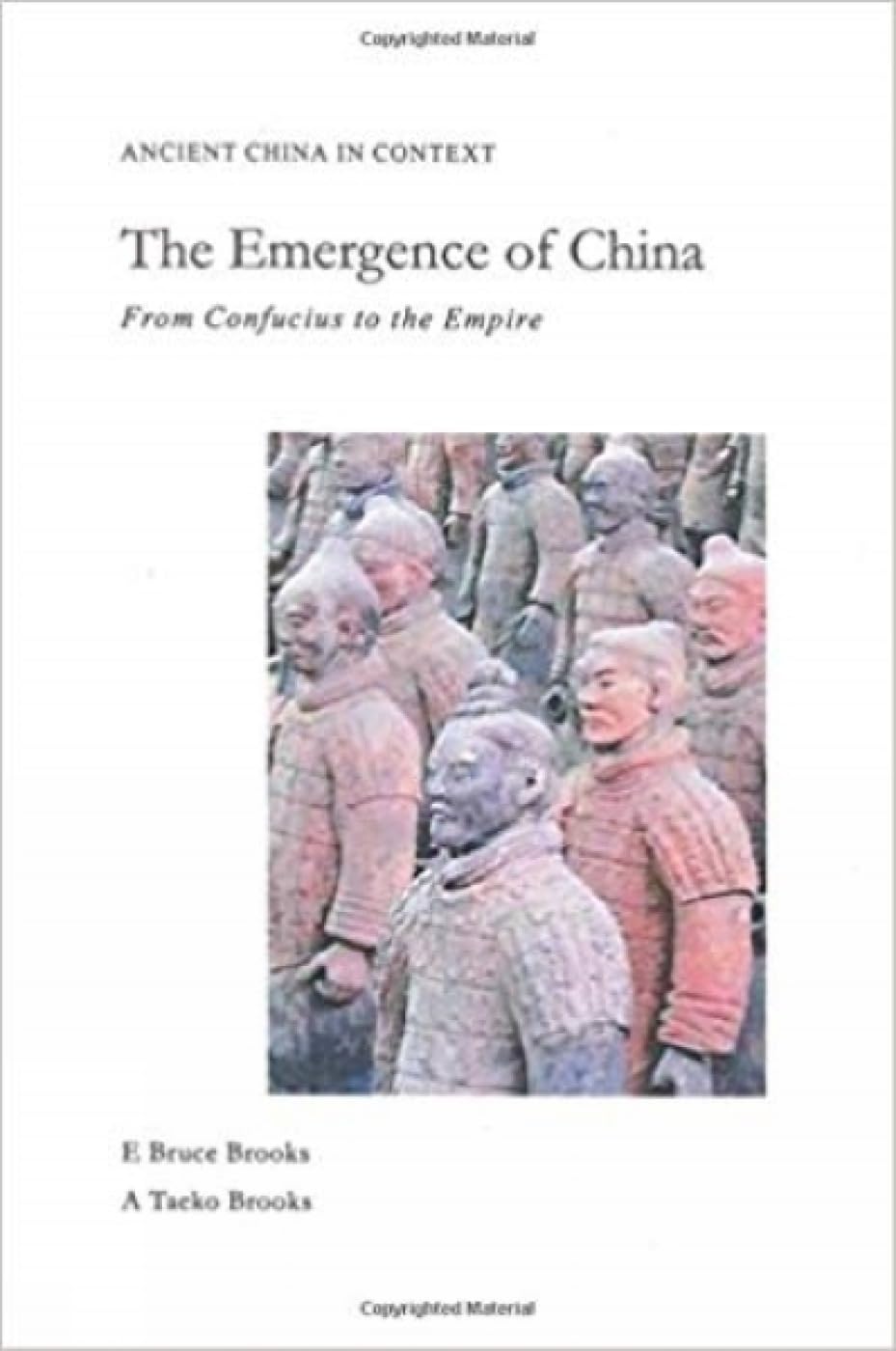
The Emergence of China: From Confucius to the Empire (Ancient China in Context)
ISBN: 1936166755
Found in 2 comments on Hacker News
We may earn a commission from purchases made through links on this page.
Not ready yet? Get weekly book picks.
lkrubner
· 2022-02-07
·
Original thread
The dates here are far too late for the title to be accurate. Especially when they are talking about the 1st century BC. This after the end of the Warring States period in China, in 221 BC.
One reason that the Chin were able to win the Warring States period is because they invented the concept of "total war", including the concept of every aspect of the economy being maximized so as to maximize the output for the war effort. The rulers of Chin ended up nationalizing quite a bit of the productive land, and then pressuring the appointed managers to maximize output, and those managers, in turn, maximized pressure on the peasants to maximize output.
A difficult but fascinating book about the political debate of the Warring States period:
Get the best books from Hacker News each week
Join 4,500+ subscribers and get the best books mentioned on Hacker News every Thursday.

Off topic, but apparently something similar happened in China, at roughly the same dates. The era of innovation was surprisingly early, and it was over before these civilizations reached their material peak. I just read this book:
https://www.amazon.com/gp/product/1936166755/ref=ppx_yo_dt_b...
This focuses on the political debate, which in some ways measures the extent of the intellectual awakening. It truly shifted my perspective about the depth of political debate in China. Apparently the lead up to the Warring States Periods, and then the Warring States Period itself, caused the greatest political debate that had existed anywhere in the world up to that point. Almost every idea was put forward: liberalism, authoritarianism, totalitarianism, constitutionally limited monarchy, centralization of the economy, decentralization of the economy, primitivism but then also some praise of the benefits of specialization and the use of economic elites. Each state was trying to win the popularity contest, and various princes occasionally tried very liberal government to win over the populace to contribute more to the war effort.
And this whole era came to a sudden end in 221 BC, when Chin was victorious in uniting all of China. But before that, China had seen an incredible intellectual awakening.
The point is, in Europe and China, the era of intense intellectual activity happened centuries before the imperial consolidation, and centuries before the material peak of the classical era.