It's fairly easy to measure how much money is produced per employee. That number grew 3% to 4% a year for most of the 20th Century, till 1973, when it collapsed. Since then it's average 1.5% a year (again, with a few good years in the 1990s, and with some up and down wobbles during the Great Recession).
The central fact is the big push towards automation in the 1930s and 1940s and 1950s simply had a bigger impact than the kind of breakthroughs we've had in the last 40 years.
The automation of the telephone systems, and the removal of all the women who worked as operators, was huge in the 1940s and 1950s (and a fantastic boost to the computer industry). The later boom in multiplexing made capital investments more profitable, but did not increase the amount of money made per employee.
The introduction of the modern combine tractors on USA farms lead to a fantastic increase in agricultural productivity in the 1930s and 1940s and 1950s and 1960s, and nothing since then has had a similar effect on agricultural productivity.
The introduction of digging robots transformed the coal industry in the 1930s and 1940s and 1950s. Mountain top clearance was another huge change in how the work was done. Nothing since the 1960s has had anything like a similar impact. In fact, the opposite is true, increased environmental protections have, if anything, decreased productivity in that sector, or at least slowed the increase.
And on and on.
The transformations in the early to mid 20th Century were huge. The more recent transformations have been small. The Great Boom gave way to the Great Stagnation.
Check out:
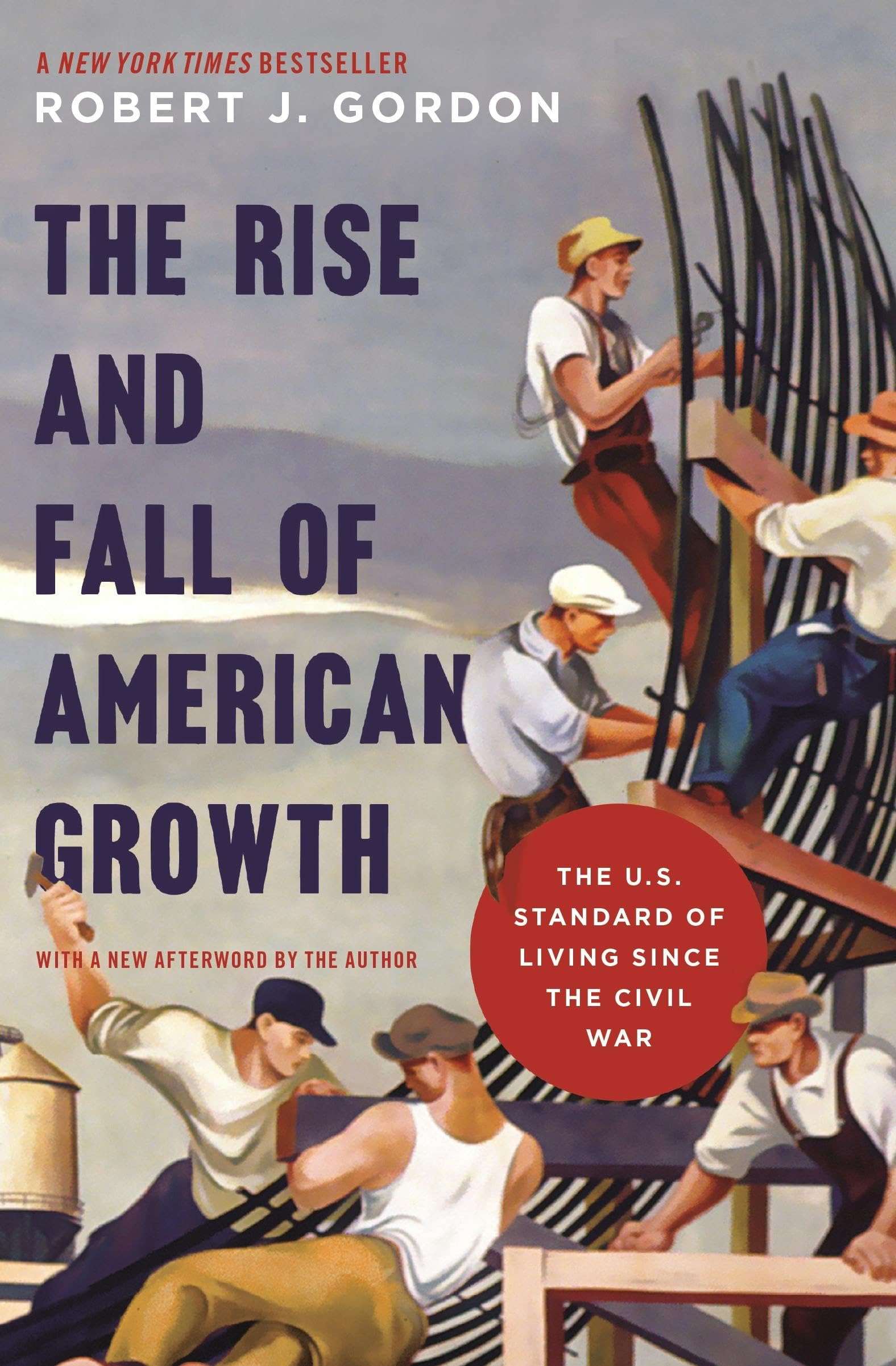
The Rise and Fall of American Growth: The U.S. Standard of Living since the Civil War
https://www.amazon.com/Rise-Fall-American-Growth-Princeton/d...
The Global Minotaur: America, Europe and the Future of the Global Economy by Yanis Varoufakis [1]
The Price of Inequality: How Today's Divided Society Endangers Our Future By Stiglitz, Joseph E. [2]
The Rise and Fall of American Growth: The U.S. Standard of Living since the Civil War by Robert J. Gordon [3]
1. https://www.amazon.com/Global-Minotaur-America-Economic-Cont...
2. https://www.amazon.com/Price-Inequality-Divided-Society-Enda...
3. https://www.amazon.com/Rise-Fall-American-Growth-Princeton/d...
I would recommend Gordon's book as an objective overview of the astonishing growth in economic and quality of life terms from 1870-1970. It's not as thoroughly researched as I expected it to be, and the prose is somewhat clunky, but it's a good lesson in the history of technology that we take for granted nonetheless.
Steinbeck's tale of the banks/landowners displacing poor, rural farming families is also extremely pertinent in light of this post. Car dealers extract value from the fleeing, unnecessariat farmers in "Grapes", while insurance companies/debtors prisons extract value from the unnecessariat rural poor chronicled in this post. The promised land of "Grapes" (California) continues to be successful today, with the coasts accreting a large portion of the nation's wealth. It's also just a beautifully written and thoroughly considered (to the point of seeming spontaneous) piece of art.
I am waiting for the next paradigm shifting technology with bated breath.
[1] http://www.amazon.com/Rise-Fall-American-Growth-Princeton/dp...
[2] http://www.amazon.com/Grapes-Wrath-John-Steinbeck/dp/0143039...
0: http://www.amazon.com/The-Rise-Fall-American-Growth/dp/06911...
Sad to say, I'm not aware of any books that tell the whole international story.
For the USA, there have been an abundance of books and articles showing the decline of the middle class:
http://billmoyers.com/2015/01/26/middle-class/
Tyler Cowen came up with the phrase Great Stagnation:
http://www.amazon.com/Great-Stagnation-America-Low-Hanging-E...
Some writers treat this as a political issue:
http://www.amazon.com/Boiling-Point-Republicans-Middle-Class...
Some writers focus on long-term factors that have little to do with politics. Robert Gordon got good reviews for his historical analysis of the specialness of the 2nd Industrial Revolution 1860-1940, and why the current era is not as robust:
http://www.amazon.com/The-Rise-Fall-American-Growth/dp/06911...
Get the best books from Hacker News each week
Join 4,500+ subscribers and get the best books mentioned on Hacker News every Thursday.

The best book on this subject is "The Rise and Fall of American Growth: The U.S. Standard of Living since the Civil War" by Robert J. Gordon.
https://www.amazon.com/Rise-Fall-American-Growth-Princeton/d...