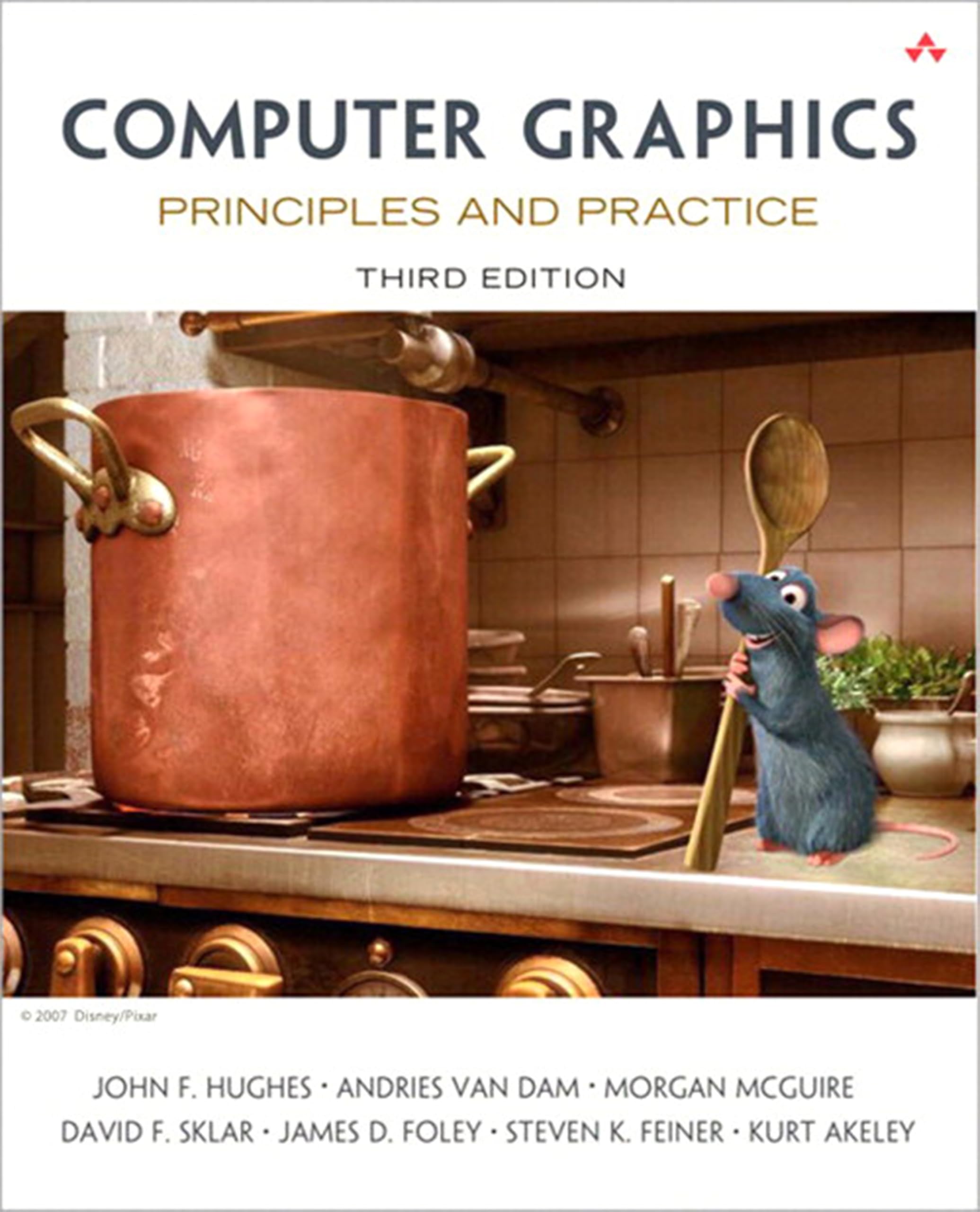
You may also be interested in "ACM: Transactions on Graphics", the Association of Computing Machinery's publication of computer graphics research papers. I suggest going to a University technical/research library, where you should be able to access the collection of issues from the 80's, where the original scan line, ray tracing, CSG, and pretty much every single advanced graphics technique (minus the deep learning) used today is documented by the original innovators.
At that same University research library they might have the collected set of course text books (mimeographs and photocopies) used for the 3-day long courses taught at SIGGRAPH every year.
These items are invaluable, and I reference them multiple times a year.
[1a, 1b, 1c] Computer Graphics, Principles and Practice Series [2] Physically Based Rendering [3] Real Time Rendering
---
[1a] https://www.amazon.com/Computer-Graphics-Principles-James-Fo... [1b] https://www.amazon.com/Computer-Graphics-Principles-Practice... [1c] https://www.amazon.com/Computer-Graphics-Principles-Practice... [2] https://www.amazon.com/Physically-Based-Rendering-Theory-Imp... [3] https://www.amazon.com/Real-Time-Rendering-Third-Tomas-Akeni...
I understand that most graphics resources out there focus on real-time 3D rendering for games or writing raytracers, which I agree are currently industry specific topics. Your average developer isn't going to write a vector graphics library as part of their day job, but the browser abstracts computer graphics in the same way it abstracts networking or compilers, so if the goal is to understand the underlying principles of software platforms you'll be working on every day I think computer graphics is a strange, biased, omission.
https://www.shadertoy.com/view/4dfGzS (or basically anything on that site)
How is that 400 lines of code.
Or this one which even generates the sound on the GPU
https://www.shadertoy.com/view/4ts3z2
With the wide adoption of WebGL, it's a good time to get involved in graphics. Furthermore, GPUs are taking over esp. with the advent of machine learning (nvidia stock grew ~3x, amd ~5x last year). The stuff nvidia has been recently doing is kinda crazy. I wouldn't be surprised if in 15 years, instead of AWS, we are using geforce cloud or smth, just because nvidia will have an easier time building a cloud offering than amazon will have building a gpu.
These are some good resources to get started with graphics/games
# WebGL Programming Guide: Interactive 3D Graphics Programming with WebGL
https://www.amazon.com/WebGL-Programming-Guide-Interactive-G...
Historically, C++ has definitely been THE language for doing graphics but if you are starting these these, you would have to have really compelling reasons to start with C++ and not JavaScript and WebGL. And that's coming from someone who actually likes C++ and used to write it professionally.
# Book of Shaders
# Game Programming Patterns
http://gameprogrammingpatterns.com/contents.html
https://www.amazon.com/Game-Programming-Patterns-Robert-Nyst...
HN's own @munificent wrote a book discussing the most important design patterns in game design. Good book applicable beyond games.
# Game engine architecture
https://www.amazon.com/Engine-Architecture-Second-Jason-Greg...
# Computer graphics: Principles and Practice
https://www.amazon.com/Computer-Graphics-Principles-Practice...
This is more of college textbook if you'd prefer that but the WebGL one is more accessible and less dry.
# Physically Based Rendering & Real-Time Rendering
These discuss some state of the art techniques in computer graphics. I'm not going to claim to have really read them but from what I've seen they are very solid.
https://www.amazon.com/Computer-Graphics-Principles-Practice...
https://www.amazon.com/Physically-Based-Rendering-Third-Impl...
My advice for people interested in graphics would be to jump in and get started with a tutorial on the web and then get a book or two to learn more. My recommendations would be:
Introduction To Ray Tracing - It focuses on ray tracing, but many of the topics (vectors, matrices, shading, view transforms, etc.) are applicable regardless of the actual rendering method, and it does a good job explaining all of it.
https://www.amazon.com/Introduction-Tracing-Kaufmann-Compute...
Real Time Rendering - This also covers all the math, but focuses on rendering at a higher level and covers more ground.
https://www.amazon.com/Real-Time-Rendering-Third-Tomas-Akeni...
Finally, Computer Graphics: Principles and Practice - This is a great general reference for more specific topics. It's like Real Time Rendering expanded to cover more topics and going into more depth. Not a beginner reference, but great to have when you need more information on something.
https://www.amazon.com/Computer-Graphics-Principles-Practice...
Bur for graphics programming, Foley and Van Damm is probably the canonical text - now in 3rd edition. http://www.amazon.com/Computer-Graphics-Principles-Practice-...
All wonderful texts and can tell you everything you want to know about doing 3D graphics in software. They won't help at all (generally) for GPU based graphics sadly.
[1] http://www.amazon.com/Computer-Graphics-Principles-Practice-...
[2] http://www.amazon.com/Principles-Interactive-Computer-Graphi...
[3] http://www.amazon.com/Computer-Graphics-3rd-Alan-Watt/dp/020...
[4] http://www.amazon.com/Real-Time-Rendering-Third-Tomas-Akenin...
Get the best books from Hacker News each week
Join 4,500+ subscribers and get the best books mentioned on Hacker News every Thursday.

https://www.amazon.com/Computer-Graphics-Principles-Practice...
Don't be scared by the price, it tends to be available on many university libraries, and I guess some 2nd hand deals as well. So that could be a way to try to get hold of it.
First edition used Fortran and Pascal, 2nd edition C, the latest C# and C++ for the samples.