The article also reports, "Its students take all their classes online, and after their first year in California, they spend each semester in a new country of their choosing." This I call burying the lede. That's the really interesting and educational aspect of this program. If the students are funded to study abroad, moving from country to country as they go through the program, the program cannot help but be educational. Living in another country can't help but get a learner unstuck from the learner's earlier prejudices. "The whole object of travel is not to set foot on foreign land; it is at last to set foot on one's own country as a foreign land."[4] What I learned from living overseas is that there are a lot of things people think that they just know from observation of the world that people with other cultural backgrounds do not assume to be true, and people from different cultural backgrounds often talk past one another until they examine their hidden "factual" assumptions about how the world works. Getting a group of learners to go all over the world while learning sounds like a very productive idea for a better education.
On the whole, it's good that the non-system of higher education in the United States allows experimentation like this. The people who are running the project aren't sure that they will produce graduates who end up getting jobs, but they will try something new and different while they have funding and see what happens.
[1] http://www.aft.org//sites/default/files/periodicals/Crit_Thi...
[2] http://www.aft.org/periodical/american-educator/spring-2006/...
[3] http://www.amazon.com/gp/product/0078038367/
http://www.amazon.com/Folly-Fools-Logic-Deceit-Self-Deceptio...
http://www.amazon.com/What-Intelligence-Tests-Miss-Psycholog...
[4] G. K. Chesterton, "The Riddle Of The Ivy" http://www.readbookonline.net/readOnLine/20697/
Get the best books from Hacker News each week
Join 4,500+ subscribers and get the best books mentioned on Hacker News every Thursday.

[1] "Critical Thinking: Why Is It So Hard to Teach?" by Daniel T. Willingham
http://www.aft.org/sites/default/files/periodicals/Crit_Thin...
[2] "Word Problems in Russia and America" by Andrei Toom (which I think I first learned about from another Hacker News participant)
http://www.de.ufpe.br/~toom/travel/sweden05/WP-SWEDEN-NEW.pd...
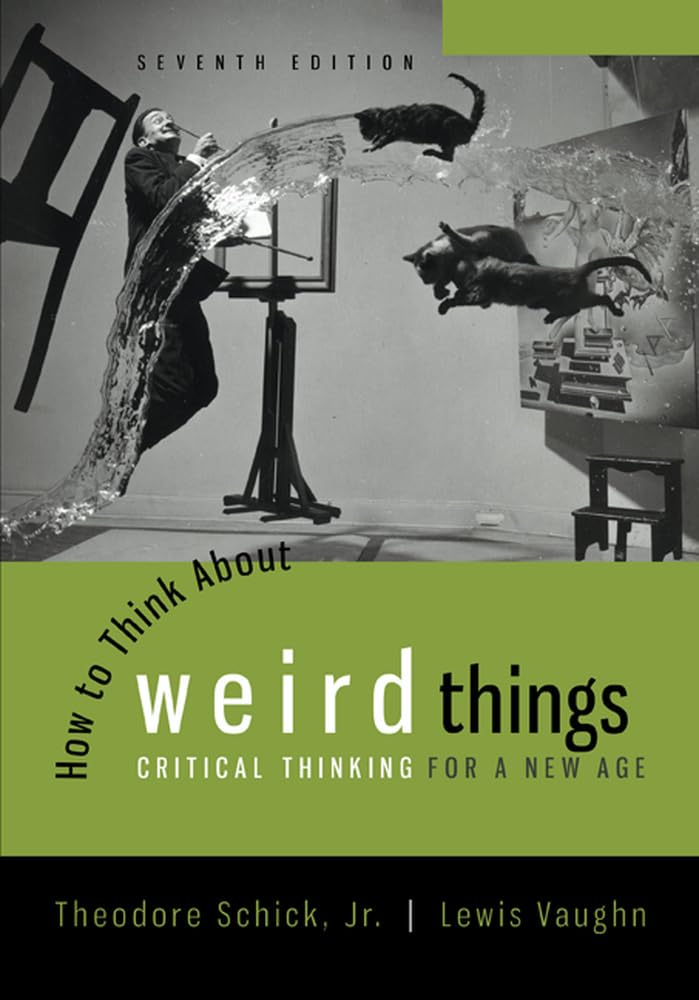
[3] For example, How to Think About Weird Things: Critical Thinking for a New Age by Theodore Schick and Lewis Vaughn
http://www.amazon.com/How-Think-About-Weird-Things/dp/007803...