> In conclusion, one doesn’t have to wear a tinfoil hat to understand that these solutions will swing both ways. And some are going to get hurt. To all those who think smart-cities will liberate humanity from repressive regimes, please think again.
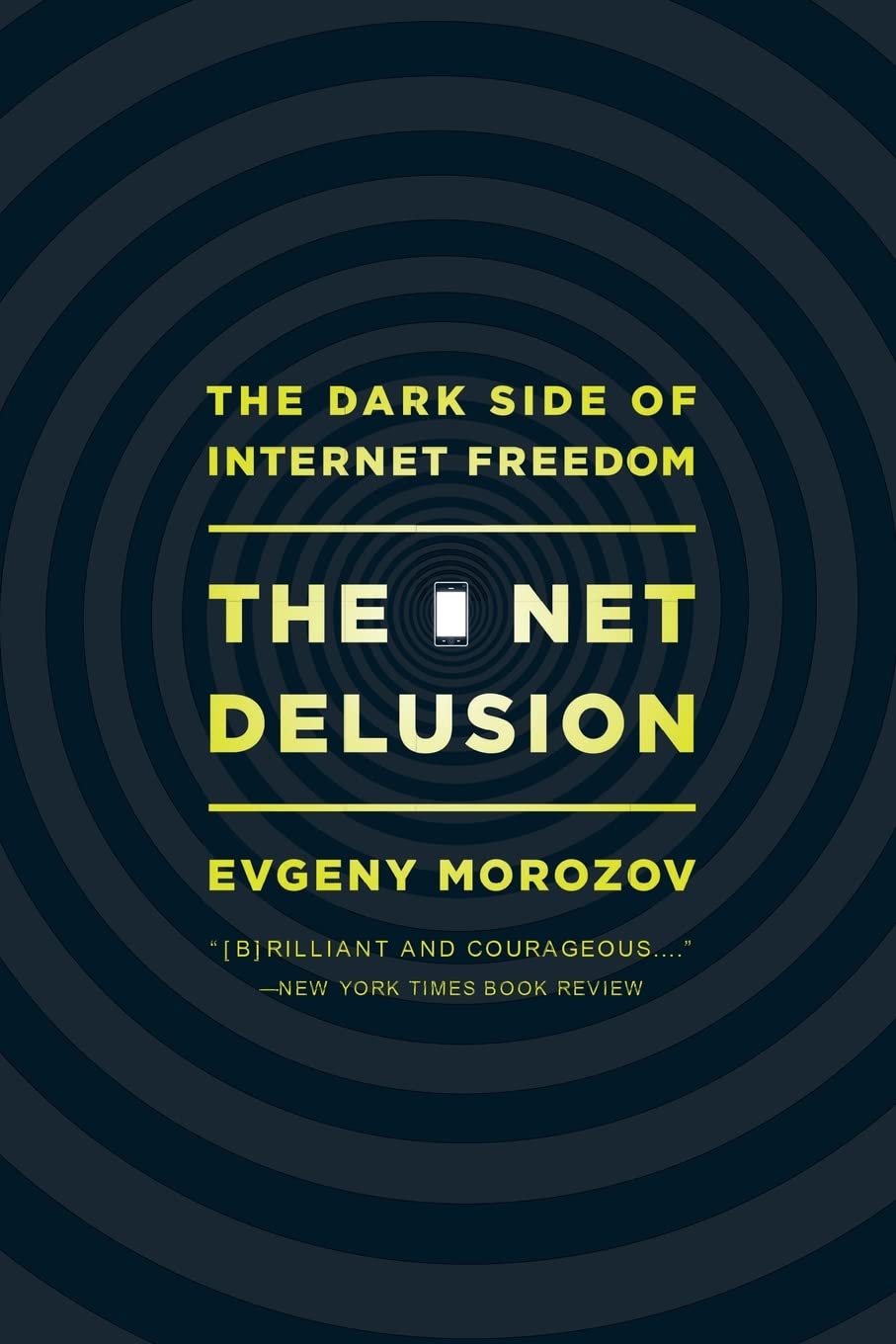
For a deeper perspective on this point, I'd highly recommend reading "The Net Delusion" by Evgeny Morozov [1]. He focuses on the moral/ethical/political/sociological aspects of modern technological change and systems that other optimistic authors intentionally fail to cover.
> Smart cities implemented over complex self serving bureaucratic processes can become an electronic manifestation of stupidity written in code.
This sentence immediately reminded me of Kafka's "The Castle."
The future could be either empowering or oppressive, or both to some degree, depending largely on how we legislatively control the technological systems we're building.
[1] https://www.amazon.com/Net-Delusion-Dark-Internet-Freedom/dp...
Hmm. But isn't the internet/new media heavily balanced towards the 1-way communication model ? Does sharing, re-sharing and commenting in the void qualify as 2-way or m2m or is it just an amplifier ? The potential is here but does it really solidify into existence for the vast majority or is just for the vocal groups (NGO, journalists, lobbyists, etc.) ?
I have in mind the net delusion [0] and the submarine model [1].
[0] https://www.amazon.com/Net-Delusion-Dark-Internet-Freedom/dp... [1] http://paulgraham.com/submarine.html
I think you'll find this book interesting:
https://www.theguardian.com/books/2011/jan/09/net-delusion-m... http://www.nytimes.com/2011/02/06/books/review/Siegel-t.html...
https://www.amazon.com/Net-Delusion-Dark-Internet-Freedom/dp...
> But the internet allows people on the so called fringe to see that they may not be the fringe after all.
Not really, the internet also has that loudest voice syndrom.
> You can say anything online and that widens the scope of what is considered acceptable discourse.
Or you get drowned in an endless sea of information, a dot in the noisegraph.
> Notice how the media tries to black out Trump's insanity but it gets so much attention on social media that they're forced to cover his tweets.
Can't comment on that as I don't live in the US :/ but it's an interesting point. How effecient can they really be at hiding something vs ignoring it.
http://www.amazon.com/Net-Delusion-Dark-Internet-Freedom/dp/...
http://www.guardian.co.uk/books/2011/jan/09/net-delusion-mor...
https://www.nytimes.com/2011/02/06/books/review/Siegel-t.htm...
Get the best books from Hacker News each week
Join 4,500+ subscribers and get the best books mentioned on Hacker News every Thursday.