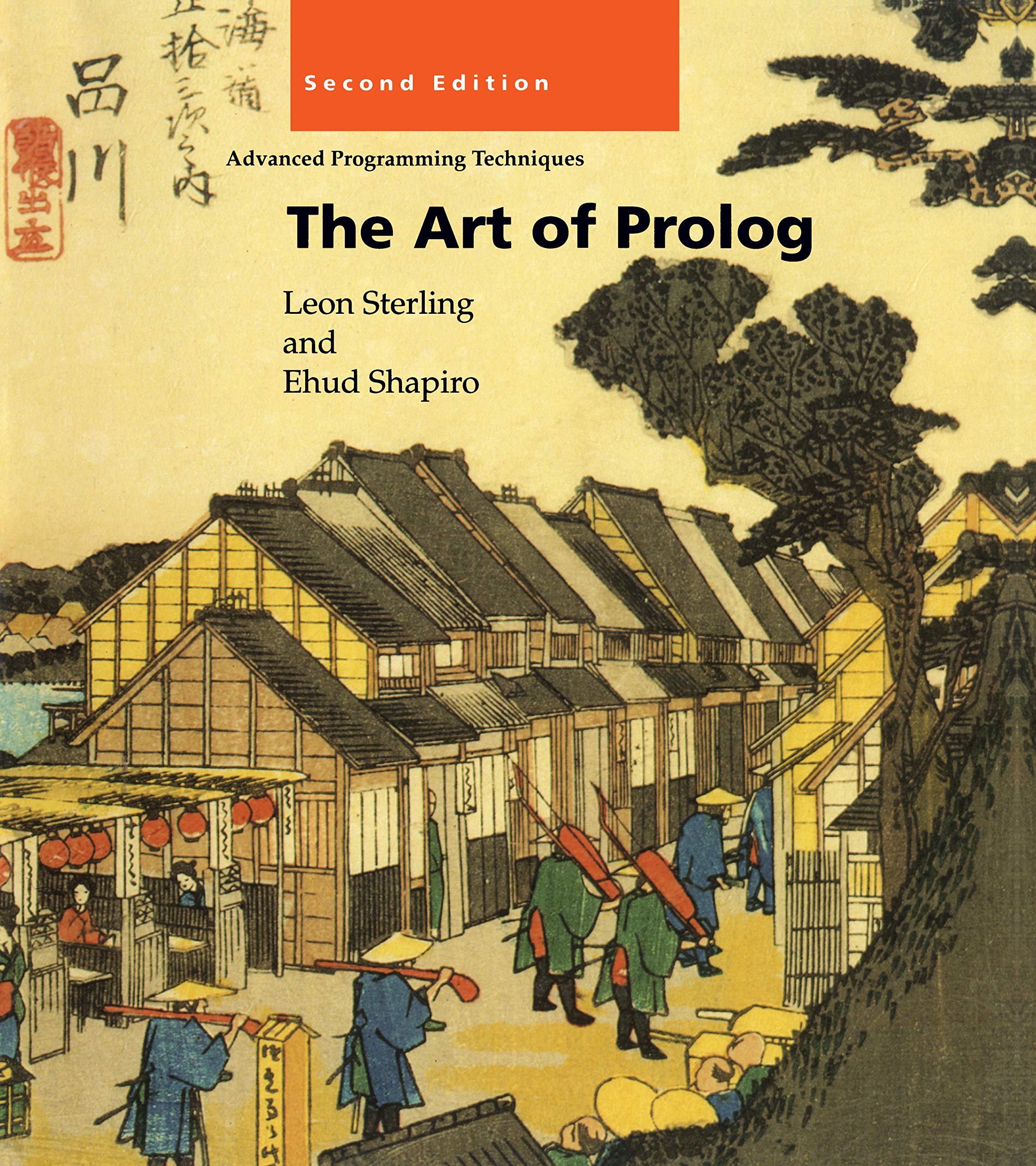
I'm about 2/3 of the way through the book, and I highly recommend it to anyone looking to learn the language in a more or less rigorous way. It won't make you a production Prolog programmer (any more than SICP will make you a production Schemer), but it starts with a firm grounding in the theory of logic programming, and works that up to a good grounding in Prolog step by step, before spending the latter half of the book working through idiomatic Prolog solutions to a bunch of standard (once-standard?) problems (a shell, an interpreter, a compiler), as well as problems more in line with Prolog's traditional uses (ELIZA, an expert system).
The book is here:
http://www.amazon.com/Art-Prolog-Second-Programming-Techniques/dp/0262193388 Get the best books from Hacker News each week
Join 4,500+ subscribers and get the best books mentioned on Hacker News every Thursday.

For examples of a recent-ish language that was developed by a professor at UIUC, see http://maude.cs.uiuc.edu/, which is based on rewriting logic and is currently still being developed/refined. But even that has strong ties to a previous language OBJ by the same creator.
If you're interested in learning something really different but a bit easier/more fun, I would strongly recommend Prolog. Schapiro has a great book (http://www.amazon.com/Art-Prolog-Second-Programming-Techniqu...).