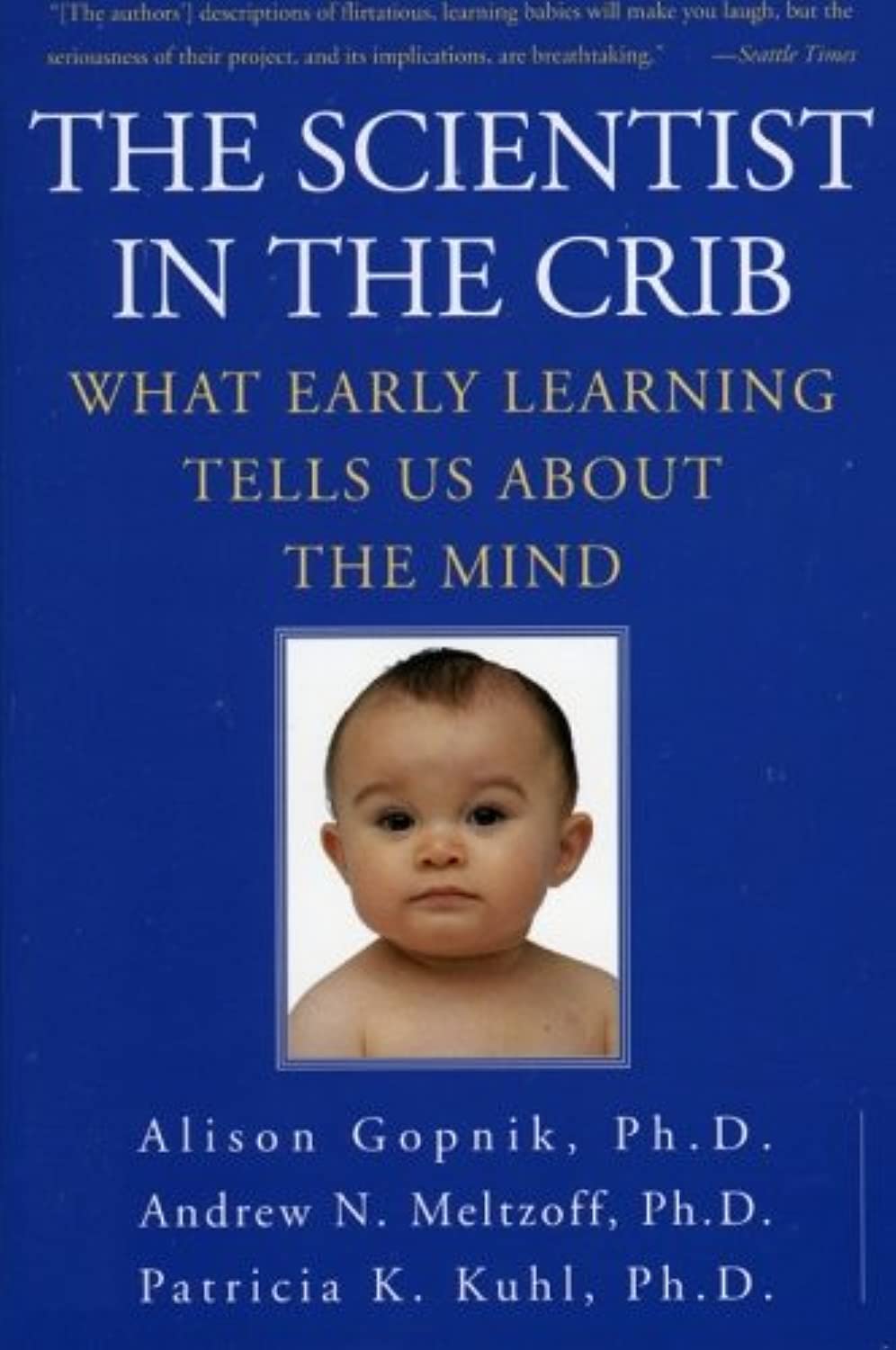
The Scientist in the Crib: What Early Learning Tells Us About the Mind
ISBN: 9780688177881
Found in 1 comment on Hacker News
We may earn a commission from purchases made through links on this page.
Not ready yet? Get weekly book picks.
Get the best books from Hacker News each week
Join 4,500+ subscribers and get the best books mentioned on Hacker News every Thursday.

I cannot agree more. If we determined to point to a "Major Flaw", that I'd propose something like inability to judge difficulty of a task a posteriori. It is the most strikingly could be seen in children:
> For instance, we can show the children a familiar candy box. Anyone who sees it will leap to the conclusion that there's candy inside. When we open it, it turns out to be a trick: there are actually pencils inside. Then we can ask the children simple questions about this series of events. What did you think was inside it? What will your friend Nicky think is inside it, if he sees it all closed up like this?[1]
Three years old children consistently believe that Nicky will think that there are pencils inside the candy box. With age people become wiser, but there are a lot of people who cannot grasp it for more complex setups. They resort to a modified version of a Hanlon's Razor[2]: if we cannot understand why someone had made a mistake, then it is because of stupidity. If a decision led to a mistake, than it was a stupid decision.
I personally believe, that it is a problem of bayesian mind, which updates probabilities after observation. Some patching could help, but only in a limited way. One cannot replay a past state of a mind on a full scale, it would require a bigger mind.
[1] https://www.amazon.com/Scientist-Crib-Early-Learning-Tells/d... [2] https://en.wikipedia.org/wiki/Hanlon%27s_razor