The next big idea invariably seems to grow out of the next small idea; ideas that are big from the beginning almost never work.
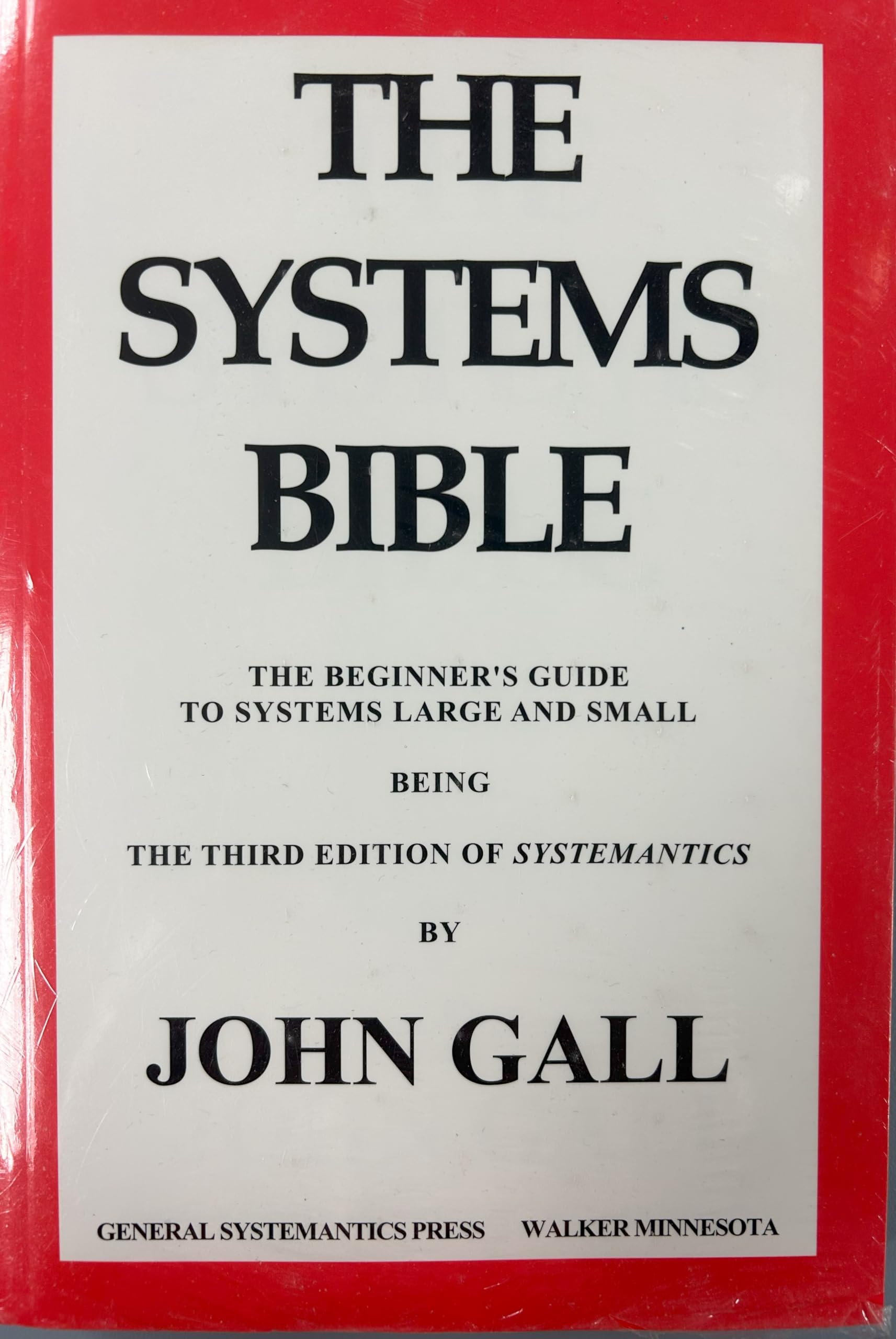
That doesn't really make sense with respect to ideas. The real quote is about SYSTEMS, from this book:
https://www.amazon.com/Systems-Bible-Beginners-Guide-Large/d...
The system is the realization of the idea. You can have a big idea, but you can't implement it all at once. TBL had a big idea, which is necessarily a big system. So he grew it from a very small piece of code (HTTP 1.0 was ridiculously simple.) There was an unbroken chain from small system to big system.
The misleading thing about Linux is that it IS IN FACT a big idea -- it's just not a technological idea. We already knew how to write monolithic kernels. But the real innovation is the software development process. The fact that thousands of programmers can ship a working kernel with little coordination is amazing. That Linus wrote git is not an accident; he's an expert in software collaboration and evolution.
Linux is a universal hardware abstraction layer, which is an easy idea in theory, but extremely difficult in practice until Linus figured out how to make it work.
So Linux is a big idea too, as well as a small system that grew into a big system.
-----
This reminds me of Paul Graham's advice: http://www.paulgraham.com/ambitious.html
Let me conclude with some tactical advice. If you want to take on a problem as big as the ones I've discussed, don't make a direct frontal attack on it. Don't say, for example, that you're going to replace email. If you do that you raise too many expectations. Your employees and investors will constantly be asking "are we there yet?" and you'll have an army of haters waiting to see you fail. Just say you're building todo-list software. That sounds harmless.
Empirically, the way to do really big things seems to be to start with deceptively small things. Want to dominate microcomputer software? Start by writing a Basic interpreter for a machine with a few thousand users. Want to make the universal web site? Start by building a site for Harvard undergrads to stalk one another.
I think that's pretty much in line with what's said here. You can have a big idea, a big 10 year goal, but you have to break in into steps. Gates had an explicit goal of "a PC on every desk" and Zuckerberg had an explicit goal of "connecting the world" (at some point, not at the very beginning). But they necessarily started small.
http://www.amazon.com/Introduction-General-Systems-Thinking-...
http://www.amazon.com/The-Systems-Bible-Beginners-Guide/dp/0...
http://www.amazon.com/Ackoffs-Best-Classic-Writings-Manageme...
I really enjoyed these books, but I am not super well-read in this area, so there may be better ones out there. You could try searching for "systems theory" and see what other resources are out there.
Systems theory is a very broad topic, so you'll find it attached to many specific disciplines, but the general idea is that you can take a bunch of simple things, hook them together, and produce a "being" that has totally weird behavior in aggregate.
A great humorous look at how systems react is: http://www.amazon.com/The-Systems-Bible-Beginners-Guide/dp/0...
I found it very insightful, and very relevant to software engineering, too.
Get the best books from Hacker News each week
Join 4,500+ subscribers and get the best books mentioned on Hacker News every Thursday.

https://www.amazon.com/Systems-Bible-Beginners-Guide-Large/d...