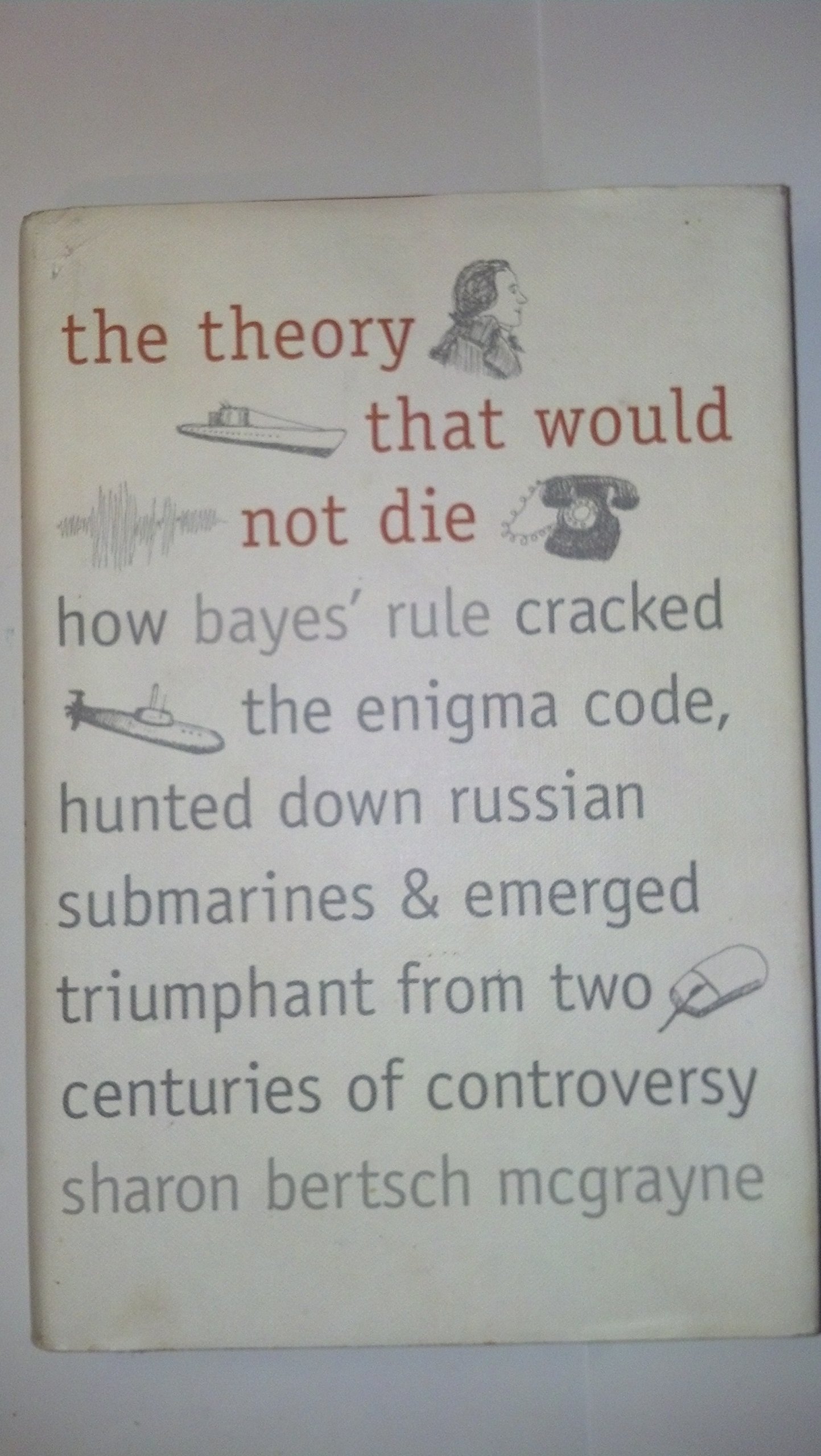
The Theory That Would Not Die: How Bayes' Rule Cracked the Enigma Code, Hunted Down Russian Submarines, and Emerged Triumphant from Two Centuries of Controversy
ISBN: 0300169698
Found in 1 comment on Hacker News
We may earn a commission from purchases made through links on this page.
Not ready yet? Get weekly book picks.
Get the best books from Hacker News each week
Join 4,500+ subscribers and get the best books mentioned on Hacker News every Thursday.

Being horribly biased in favor of the Bayesian interpretation ever since I learned it was a thing I'll give an example of places that frequentists can be wrong. People who disagree can give counterexamples. ;)
http://lesswrong.com/lw/1gc/frequentist_statistics_are_frequ...
On the other hand, some argue that certain forms of inference are invalid and that it doesn't matter if they give the correct answer or not in practice because they're invalid. Calculus was attacked on this basis early on because many mathematicians thought that taking the limit of something as it approached 0 wasn't a thing you should be able to do.