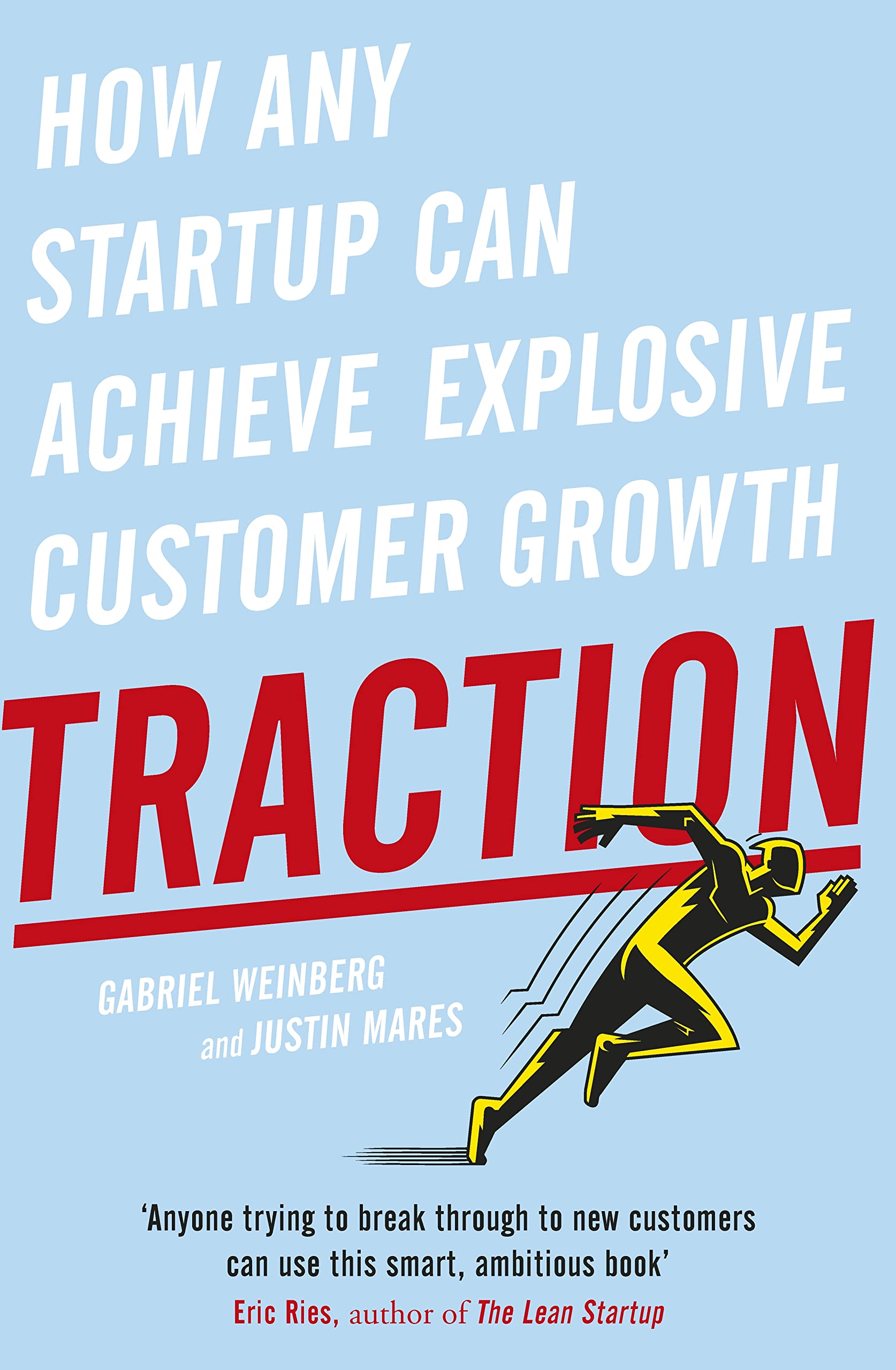
For marketing, I recommend Traction by the founders of Duck Duck Go. It gives a practical guide to tons of different marketing channels and when each one is appropriate https://www.amazon.com/Traction-Startup-Achieve-Explosive-Cu...
For sales, I recommend How You Make the Sale. It's a general sales book no matter if you're selling software, services, or physical goods and it does a great job of walking you through the sales process and where it overlaps with the buying process. It also helps reframe a lot of the "scary" parts of sales like objections as "requests for more information". Highly recommend for technical people who are new to sales https://www.amazon.com/How-Make-Sale-Frank-McNair/dp/1402204....
Get the best books from Hacker News each week
Join 4,500+ subscribers and get the best books mentioned on Hacker News every Thursday.
There's also no real point in running ads when all you have is an MVP. Ads are for demand generation once you have a really solid handle on the problem, the product, sales channels, etc.
My suggestion would be the following:
1. Stop writing code or doing any development work
2. Cut expenses to the bone by any means necessary so that you're "default alive" no matter what (for the foreseeable future anyway)
3. Get yourself a copy of The Four Steps to the Epiphany[1] by Steve Blank. Read it. Then read it again.
4. Go through the customer development process as outlined by Blank, and start talking to prospects.
5. Don't start writing code again until/unless you sync up to that point where the process has you starting to take an MVP out to show to prospects.
6. Pick up from there and follow the process.
Now an exception would be this: you talk about a mature market. IF there are already plenty of well established, mature, market proven solutions that do more or less the same thing as your proposed solution, then you can skip some of the validation stuff. I mean, you could guarantee that you're at least building "something people want" by just copying one or more of your competitors. BUT... if all you're doing is copying a competitor, you have to ask "why would a customer buy your solution instead of theirs?"
Ideally in that case, you have some vision or idea for a "thing" that distinguishes your solution from the others on the market. In that case, though, you still have to validate that the market players actually see your proposed solution as better than the other solutions OR you need to be "at least as good as the others" but significantly cheaper, or something.
In terms of addressing all of that, a couple of books I'd suggest reading include:
1. The Discipline of Market Leaders[2]
2. Differentiate or Die[3]
3. Zero to One[4]
4. Traction[5]
[1]: https://www.amazon.com/Four-Steps-Epiphany-Successful-Strate...
[2]: https://www.amazon.com/Discipline-Market-Leaders-Customers-D...
[3]: https://www.amazon.com/Differentiate-Die-Survival-Killer-Com...
[4]: https://www.amazon.com/Zero-One-Notes-Startups-Future/dp/080...
[5]: https://www.amazon.com/Traction-Startup-Achieve-Explosive-Cu...