If you just want to dip your toe in reading history, the Cartoon Guide to the History of the Universe series is a reasonable place to start. I think it prioritizes entertainment over accuracy some, but it's pretty entertaining! https://www.amazon.com/Cartoon-History-Universe-Volumes-1-7/...
Someone I know factchecked a different book, A Brief History of the Human Race, and said it did really well: https://acesounderglass.com/2017/04/18/epistemic-spot-check-...
I read A Brief History of the Human Race based on their recommendation and I can def recommend it also. So here's the link on Amazon: https://www.amazon.com/Brief-History-Human-Race/dp/039332645...
After learning about the macro contours of history, I started reading more about specific things which seemed potentially interesting. I liked all of these, roughly in this order:
* Venice: https://www.amazon.com/Venice-History-Thomas-F-Madden/dp/014...
* Lincoln and contemporaries: https://www.amazon.com/Team-Rivals-Political-Abraham-Lincoln...
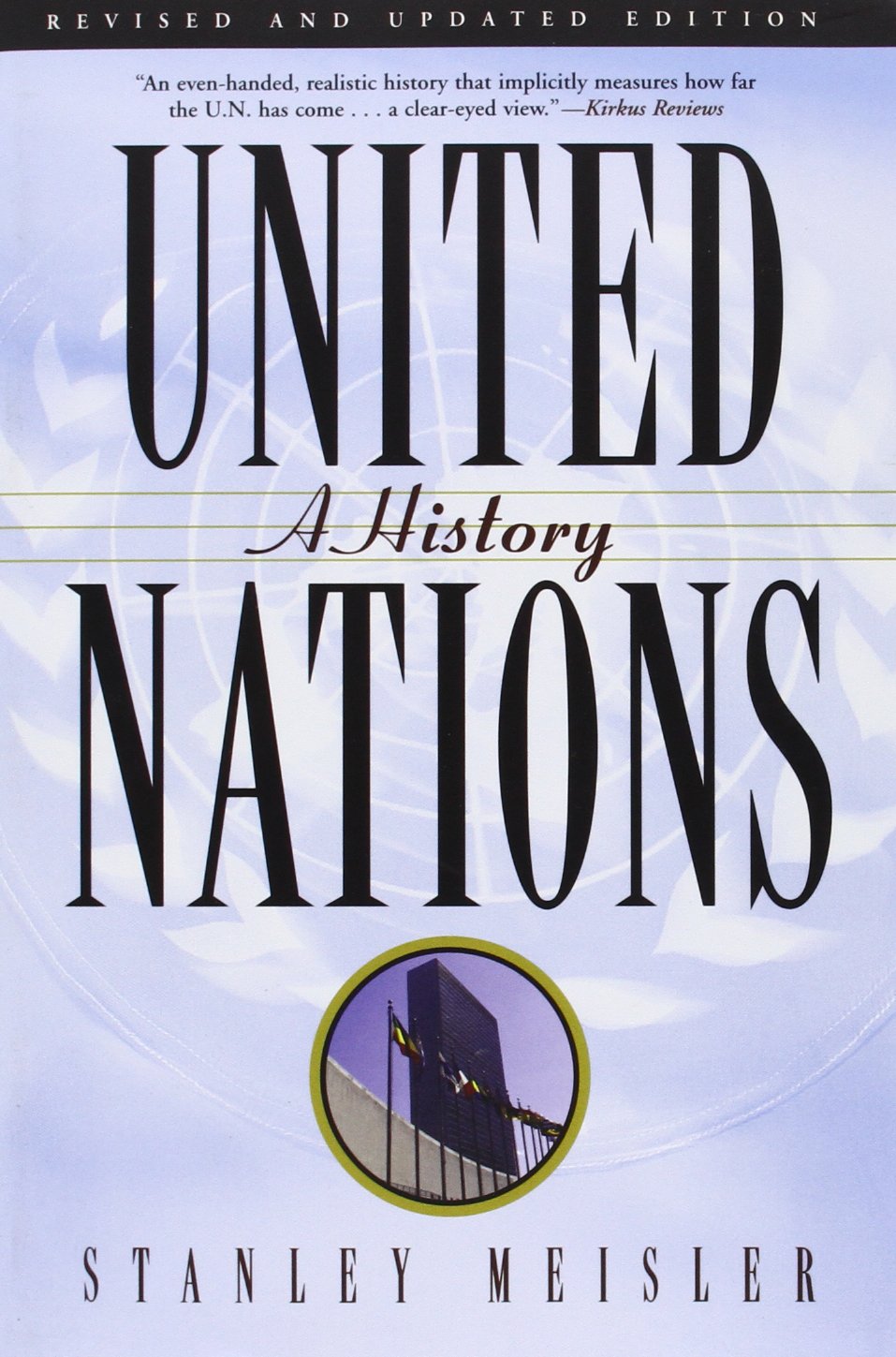
* The United Nations: https://www.amazon.com/United-Nations-History-Stanley-Meisle...
Reading history is a great way of getting a broader perspective.
Learning about history is underwhelming when you do it as a kid because when you're young, everything is new to you. You don't gain an appreciation for how interesting the past really was.
But as an adult, you have a well-developed model of how the world is supposed to be, so history becomes really interesting because you realize that lots of historical events actually violate your model. (Did you know that when Venice first heard about the USA, they didn't bother establishing diplomatic relations because they thought the experiment would not last? Turns out it was the Venetian state that soon disappeared! Sometimes it feels like I'm highlighting an interesting fact like that on practically every page. There's a lot that gets left out of popular narratives.)
Get the best books from Hacker News each week
Join 4,500+ subscribers and get the best books mentioned on Hacker News every Thursday.

I recommend this book:
https://www.amazon.com/United-Nations-History-Stanley-Meisle...
The UN isn't working very well right now, but it's worked considerably better in the past. In the wake of WW2, I think there was a genuine sentiment that war was really horrible and it should be avoided at all costs. Sadly most of the people who saw WW2 have passed away by this point.
In terms of populations "making better decisions on the sorts of foreign policy views to support" -- I think international law is, if anything, helpful in this regard. Foreign policy is complex, and human nature is such that people are always predisposed to see their own interests as just, or at least cloak their interests in the language of justice. On the other hand, total pacifism is also ideologically unworkable for various reasons. (Even most leftists are against "America First" style isolationism for WW2 or Ukraine.) So international law is valuable in the sense that, at least in principle, it helps you figure out who the bad guy is: Who is breaking international law? That may sound rather academic, but in practice it seems to carry more weight than you might expect.
To state my position another way: I think having some sort of international law is a good idea, even if the current scheme needs to be reworked. A better scheme might be: Have some ritualized, non-lethal way for nations to test strength against each other, e.g. through athletic competitions or wargames, as a binding method of resolving disagreements. This could be game-theoretically stable, if success at the "ritual test of strength" is thought to correlate strongly with real-world war performance. Furthermore, any state which initiates lethal, kinetic confrontation after losing the "ritual test of strength" (sore losers who refuse to abide by the outcome) should become international pariahs subject to secondary sanctions.