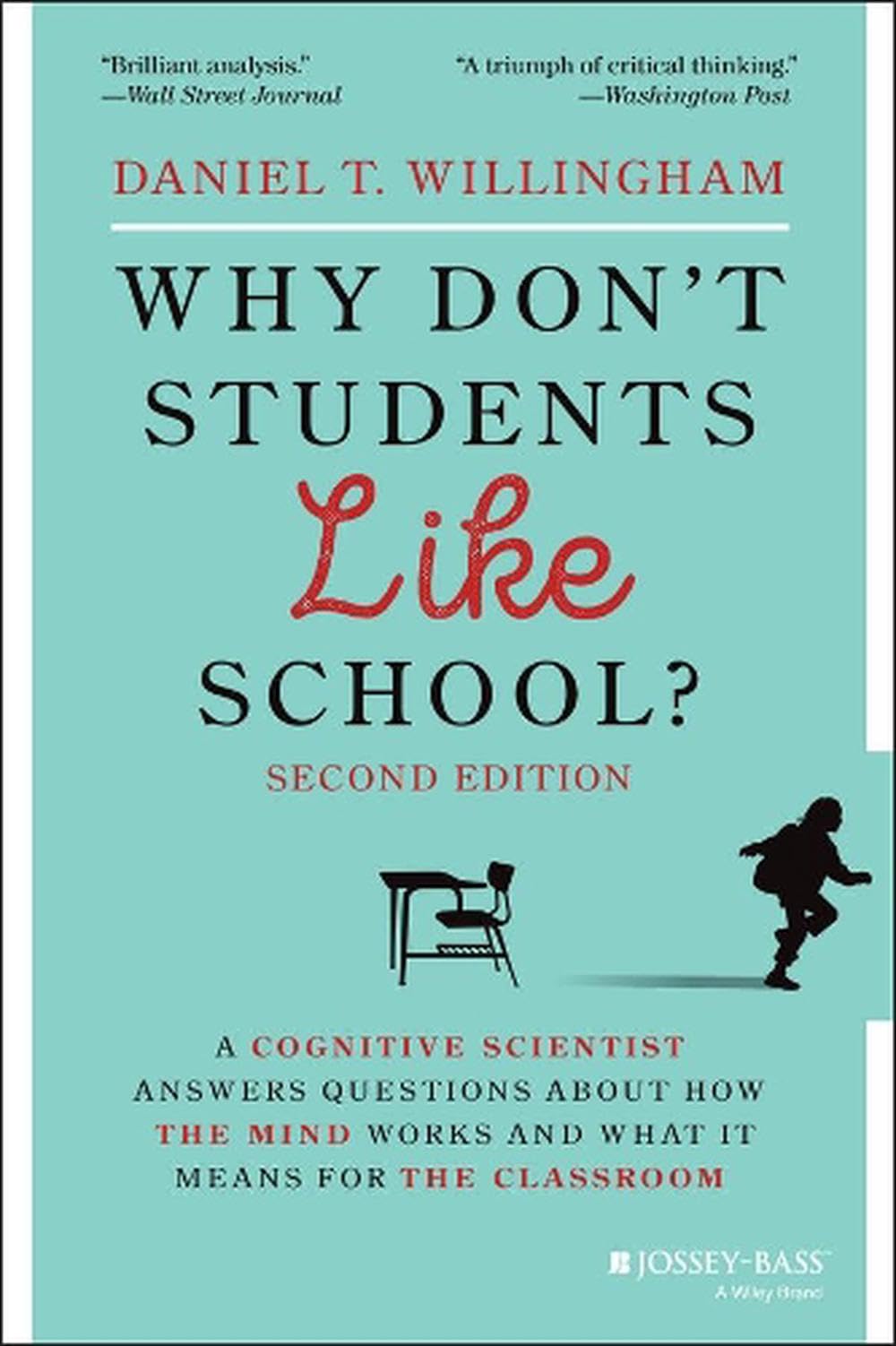
The author of this article is Daniel T. Willingham. He is a psychologist at the University of Virginia and author of some very good books on learning, schools and education.
He is a good, careful and informed thinker on the subject of learning and children.
I recommend his book "Why Don't Students Like School?" [0] for an insightful look at one of the pieces of the puzzle that is Education.
[0] "Why Don't Students Like School?: A Cognitive Scientist Answers Questions About How the Mind Works and What It Means for the Classroom" https://www.amazon.com/Why-Dont-Students-Like-School/dp/0470...
> surprisingly few studies of this format have produced supporting evidence for learning styles; far more evidence (such as this study) runs counter to the myth.
There's been a number of meta-analysis done (e.g. [1]), and they overwhelmingly conclude that there's just no support for learning styles. So, it's a myth until proven otherwise. See also Willingham's book based on his research [2], and his FAQ here which links to more research [3].
[1]: https://www.indwes.edu/cli/research/meta-analysis-summary---...
[2]: http://www.amazon.com/Why-Dont-Students-Like-School/dp/04705...
[3]: http://www.danielwillingham.com/learning-styles-faq.html
It's not an easy process, moving from one state to another, and it's also not a binary one. Willingham's focus is on how teachers can do this more effectively, but he also describes how people in general can or should.
I'm guessing that we can't remember books because many books give us relatively shallow knowledge and because most books have too many details for us to remember the finer points of them. But this probably changes over time: when I used to read fiction as a teenager or just after I started college, I mostly remember whether I liked the book or not. Now I'm in grad school for English and tend to remember the plots, how characters express themselves, the main conflicts in the novel and what those main conflicts signal, etc. So in reading Emma again this week, I realized that many of Austen's characters are actually judging themselves when they judge others, because their views of what is "right" or "proper" is mostly about preferences (and I actually wrote a post on the subject: http://jseliger.com/2010/09/29/jane-austen-emma-and-what-cha...). Now I'm likely to remember when Emma admits she's wrong and so forth.
Granted, I've read the novel before, but that happens with other novels too.
Finally, I now often write blog posts about books or take notes on them using Devonthink Pro as described by Steven Berlin Johnson: http://www.stevenberlinjohnson.com/movabletype/archives/0002... . This dramatically increases retention.
Get the best books from Hacker News each week
Join 4,500+ subscribers and get the best books mentioned on Hacker News every Thursday.