https://www.amazon.com/Economists-Diet-Surprising-Formula-Ke...
The subtitle is a lie. There's nothing "surprising" here at all. It's complete common sense.
Also:
"Fitness Confidential: Adventures in the Weight-Loss Game"
https://www.amazon.com/FITNESS-CONFIDENTIAL-Adventures-Weigh...
Taubes is good too:
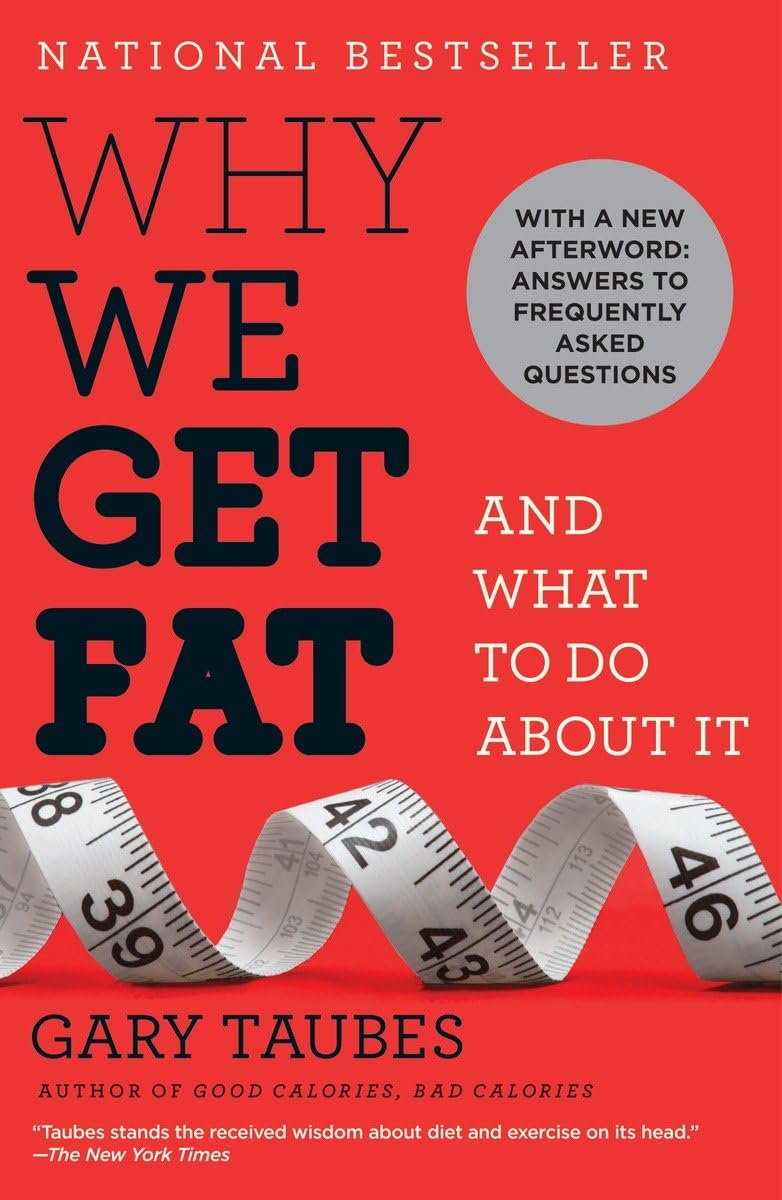
"Why We Get Fat: And What to Do About It"
Simple carbs spike up blood sugar through the roof, the body responds by dumping insulin, the insulin causes blood sugar to be sequestered in fat and muscle cells (as intended), but if the dump is large it may overshoot and the blood sugar falls through the floor. Aka "sugar crash". The crash will of course make you crave food again, the same simple carb kind. Vicious cycle.
This sort of see-saw messes you up real bad. So I was told [1]
[1] https://www.amazon.com/Why-We-Get-Fat-About/dp/0307474259
I have since then thrown in intermittent fasting as well. I fast 22 hours a day, work out at the end of the day, and then go home and eat 1kg of steak/lamb. I think intermittent fasting is worth adding to any diet, vegan or otherwise.
[1] Book was printed in 1956, so copyright may have expired. There's PDFs online. Here's a link to Stefansson's Wikipedia entry: https://en.wikipedia.org/wiki/Vilhjalmur_Stefansson
[2] Non-affiliate: https://www.amazon.com/Why-We-Get-Fat-About/dp/0307474259
https://www.amazon.com/Why-We-Get-Fat-About/dp/0307474259
then, as others have said, reddit.com/r/keto is good for "how to"
I read that 4 years ago, spent another 4 months reading the listed studies, convinced myself it was a good plan, and lost 40 pounds with no exercises. I still do LCHF after all these years, and likely will never go back to a traditional diet, it feels great.
In short, for most of us, our fat tissue is regulated primarily through our response to insulin.
The advice in short is: avoid all carbohydrates as much as possible, and eat protein and fat.
[1] http://www.amazon.com/Why-We-Get-Fat-About/dp/0307474259/
http://www.amazon.com/Why-We-Get-Fat-About/dp/0307474259
The third chapter is all about why exercise isn't a good way to lose weight. It is generally a fantastic book.
This summer I've been reading a lot of books [1] on a low carb, moderate protein, high fat diet. It is called a LCHF or Keto diet. I now think that insulin resistance has a lot more to do with weight than I realized. I've lost 30 pounds this summer without counting calories (or weight watchers points). I just keep my carbs below 20g a day, and try not to eat too much protein. I'm not hungry, it doesn't take time to track, I feel really good, and the weight has some off so much faster than with weight watchers.
[1] My summer reading, that has really changed my life:
Why We Get Fat, by Gary Taubes
http://www.amazon.com/Why-We-Get-Fat-About/dp/0307474259
The Big Fat Surprise: Why Butter, Meat and Cheese Belong in a Healthy Diet, by Nina Teicholz
http://www.amazon.com/Big-Fat-Surprise-Butter-Healthy/dp/145...
Death by Food Pyramid: How Shoddy Science, Sketchy Politics and Shady Special Interests Have Ruined Our Health, by Denise Minger
http://www.amazon.com/Death-Food-Pyramid-Politics-Interests/...
Keto Clarity: Your Definitive Guide to the Benefits of a Low-Carb, High-Fat Diet, by Jimmy Moore, Eric Westman MD
http://www.amazon.com/Keto-Clarity-Definitive-Benefits-Low-C...
I was really surprised that most of what the medical establishment says about diet is so incredibly backwards.
When I first encountered the idea that we do not get fat from eating too much and that calories weren't responsible, I thought it ludicrous—the body can't disobey the laws of physics! Thermodynamics! But after seriously thinking about the idea, I realized Taubes was providing a far more complete understanding of metabolism. The human body doesn't run on calories, it runs on food. Yes, we can easily learn the caloric content of food, but that's largely irrelevant. What's important is how food affects the body, not its raw energy content. I see this misconception time and time again, especially among smart people who like to reduce the human body to merely a physical machine, often ignoring the whole biology thing.
I think the hormone theory of obesity is correct and I think these studies will prove it. But even if they show otherwise, this type of research is long overdue and we all stand to benefit from the results.
[1]: http://www.amazon.com/Why-We-Get-Fat-About/dp/0307474259
Why We Get Fat: And What to Do About It http://www.amazon.com/Why-We-Get-Fat-About/dp/0307474259
Good Calories, Bad Calories: Fats, Carbs, and the Controversial Science of Diet and Health http://www.amazon.com/Good-Calories-Bad-Controversial-Scienc...
From things I've read [1] it seems that the vast majority of people consume more calories than they 'burn' but only in some people is it converted to unwanted weight gain. The real question, as many people have been referring to, is how do you determine whether your body hangs onto the extra calories as weight or simply disposes of it.
Saying "If you eat less energy than you burn, you will lose weight" is certainly true, but is akin to saying: "If you never get in a car your chances of dying in a car accident are significantly reduced." It's true...but not really helpful or meaningful.
1 - http://www.amazon.com/Why-We-Get-Fat-About/dp/0307474259
Get the best books from Hacker News each week
Join 4,500+ subscribers and get the best books mentioned on Hacker News every Thursday.

"Why We Get Fat" by Gary Taubes
https://www.amazon.com/Why-We-Get-Fat-About/dp/0307474259/
and
"The Big Fat Surprise" by Nina Teicholz
https://www.amazon.com/Big-Fat-Surprise-Butter-Healthy/dp/14...
Finding that statins would lengthen my lifespan by at most ~30 days or less really chapped my ass (i.e.,irritated me), given that so much time and effort went into prescribing/ordering/buying/taking/monitoring statins on a regular schedule, along with their attendant blood tests (Total cholesterol, LDL, HDL, triglycerides et al) and time spent listening to my fear-mongering physician:
https://www.bing.com/search?q=how+long+will+statins+lengthen...
When I faced my doctor down about this he fell back to saying that "you increase your probability of a heart attack by 17%". He neglected to say how significant it was that, in the last year alone, I had lost 15 pounds, increased my exercise level, now slept better and had improved my diet significantly. He went through the motions but I stood firm. In desperation he threw out "But high blood pressure is strongly correlated with increasing age and you can't turn the clock back!" I countered that my blood pressure is better than it's ever been and that I intend to reduce it further. Then I told him that the cholesterol hypothesis is dead [ed. the cholesterol hypothesis is the idea that cardiovascular disease is caused by high levels of cholesterol in the blood stream]:
https://www.bing.com/search?q=is+the+cholesterol+hypothesis+...
With that, he seemed dumbfounded and finally stopped selling me statins.
We've fallen back to a previous era where physicians in the USA are useless except for trauma intervention and as gatekeepers for antibiotics (and other newer drugs). If the USA would allow pharmacists to prescribe (as is done in Europe) we could save trillions of dollars. But physicians' prestige and power would be reduced to a shadow of what they are today. Time to put them back in their proper place.
Covid-19's revelations of the flawed advice of "experts" has been enlightening. Every expert source has failed in big ways: epidemiology is a laughing stock, the FDA, WHO and CDC have dropped the ball repeatedly, given flawed advice, reversed guidelines and in general, established a baseline of SNAFU FUBAR:
https://www.bing.com/search?q=SNAFU+FUBAR
But my physician is no better: he's been selling me bullshit for decades.
And now this article. Grrr! Good thing my blood pressure is under control!